
Interviews with Portfolio Companies
The Challenge of a Rare Independent Inspection Gauge Manufacturer: Manufacturing That Supports Production Floors Through Greater Efficiency
#Capital Alliance
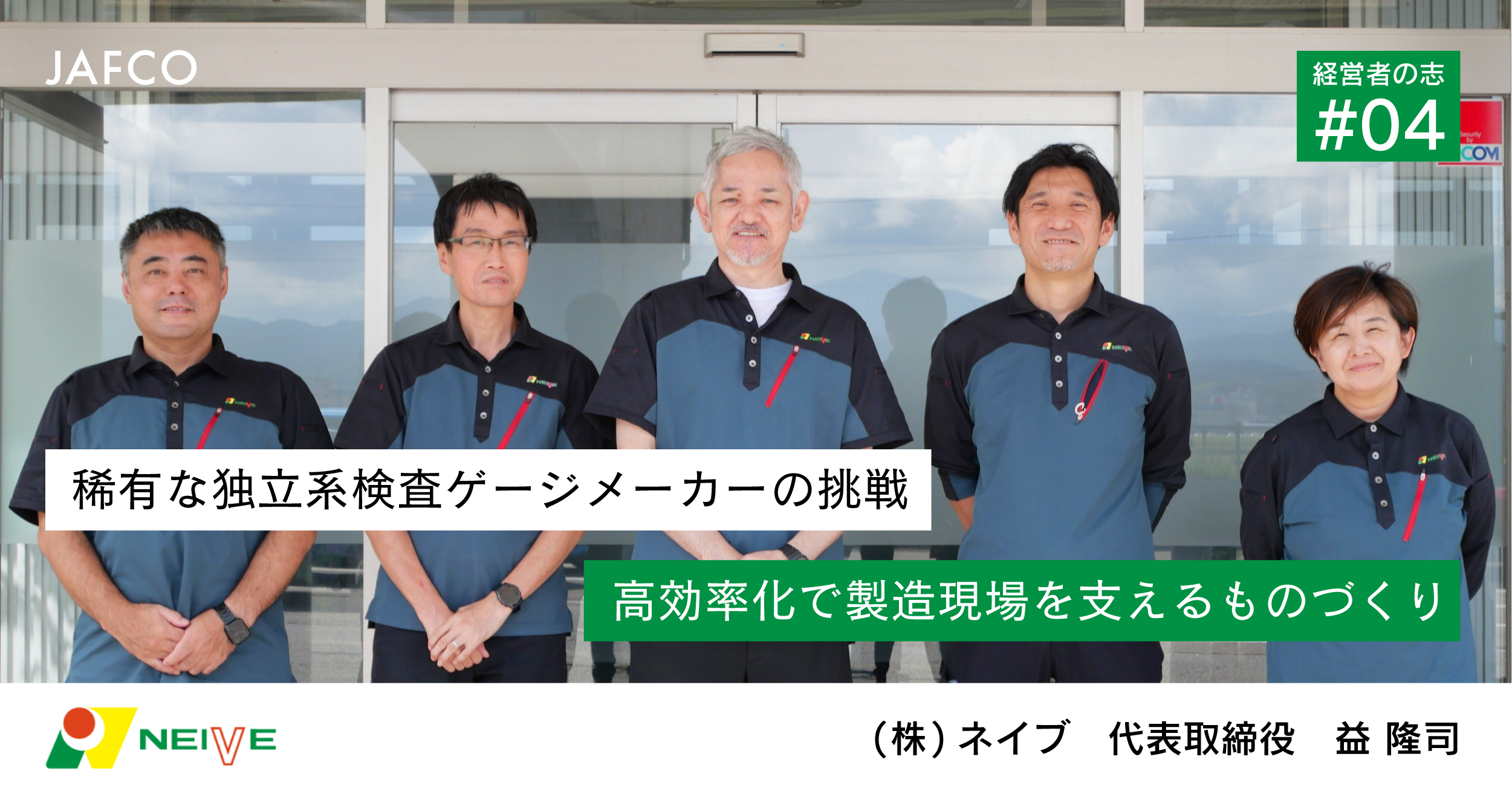
“Management’s Aspirations” features interviews with managers who have overcome various challenges and explores the values they hold as leaders as well as the goals they seek to achieve through their businesses. In our fourth installment, we feature Takashi Masu, Representative Director of NEIVE Co., Ltd., and speak with him about the company’s future challenges, together with perspectives from JAFCO’s investment professional in charge, Tatsuhiro Sunayama.
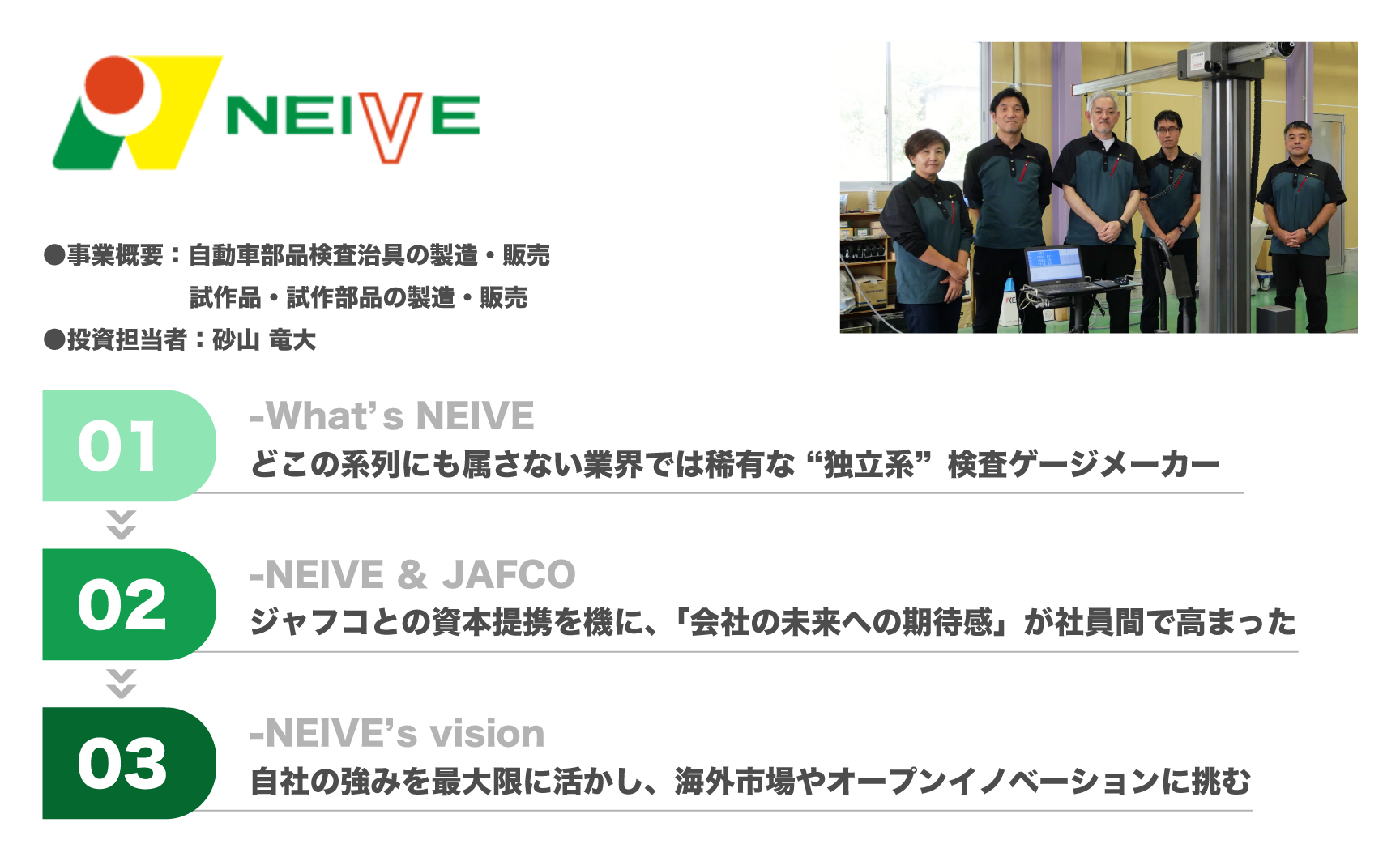
NEIVE Co., Ltd.
PresidentTakashi Masu
After working at an advertising agency and a store design / construction company, and traveling across Europe as a backpacker, he became a freelance store designer and graphic designer. He later joined Isuzu Glass Ltd., where he worked on quality improvement and cost reduction initiatives, served as overall manager for a factory relocation project, and acted as General Manager of the Hong Kong plant. As head of supply chain management, he promoted organizational restructuring and cost negotiations, contributing to a return to profitability. He joined NEIVE Co., Ltd. in January 2025, became Representative Director & COO in June, and was appointed President in August.
About NEIVE Co, Ltd.
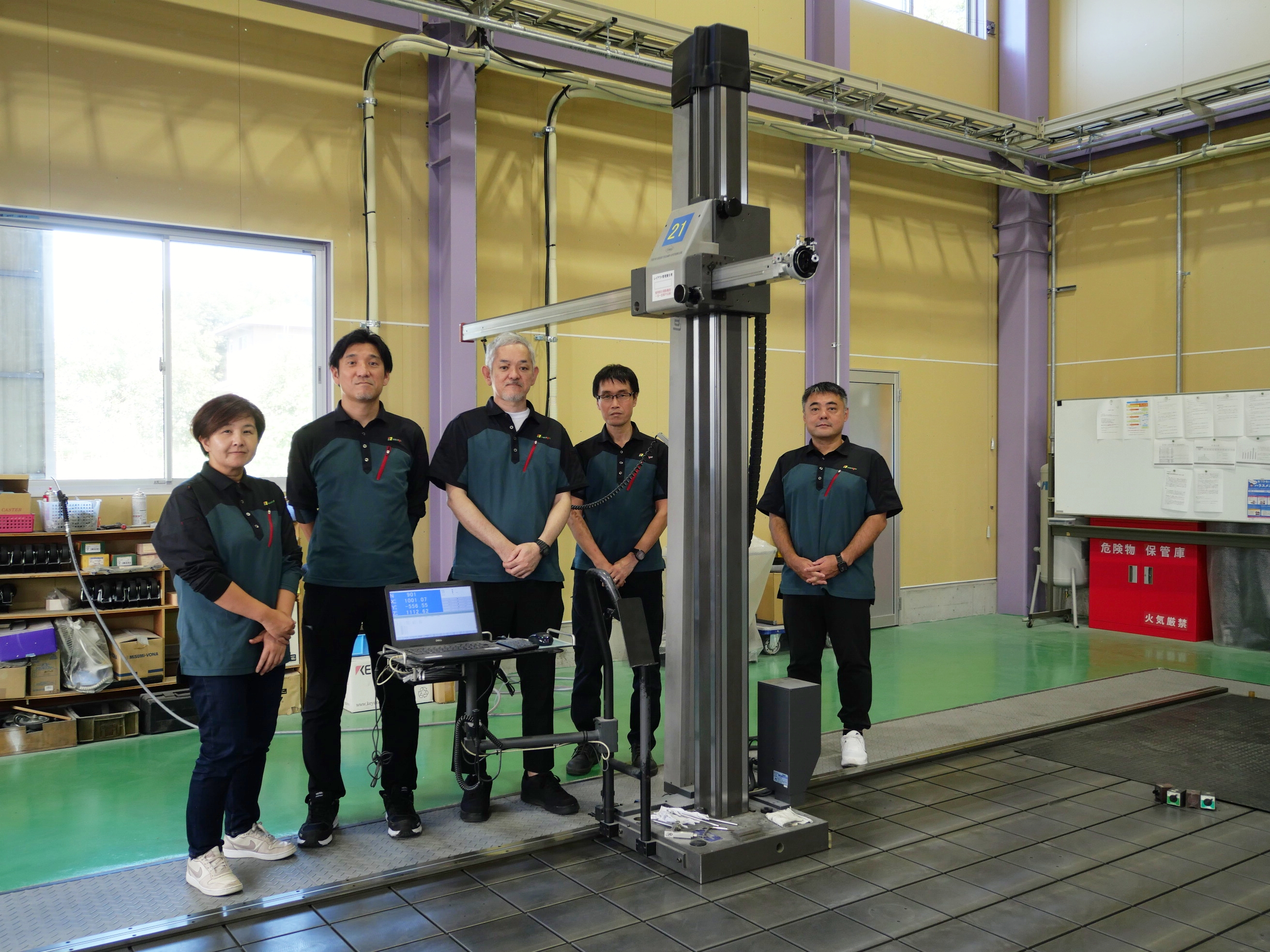
Founded in 1990, the company is headquartered in Kaga, Ishikawa Prefecture. It manufactures and sells inspection gauges used to measure automotive parts. All processes, including design, welding, resin processing, metal processing, and assembly, are handled in house. Strengths include short delivery times, low costs, high quality, and an exceptionally high operating profit margin. While most competitors belong to automotive manufacturer groups, NEIVE operates as an independent company and does business with all domestic automobile manufacturers.
NEIVE Co., Ltd.
A Rare “Independent” Inspection Gauge Manufacturer in an Industry Dominated by Affiliations
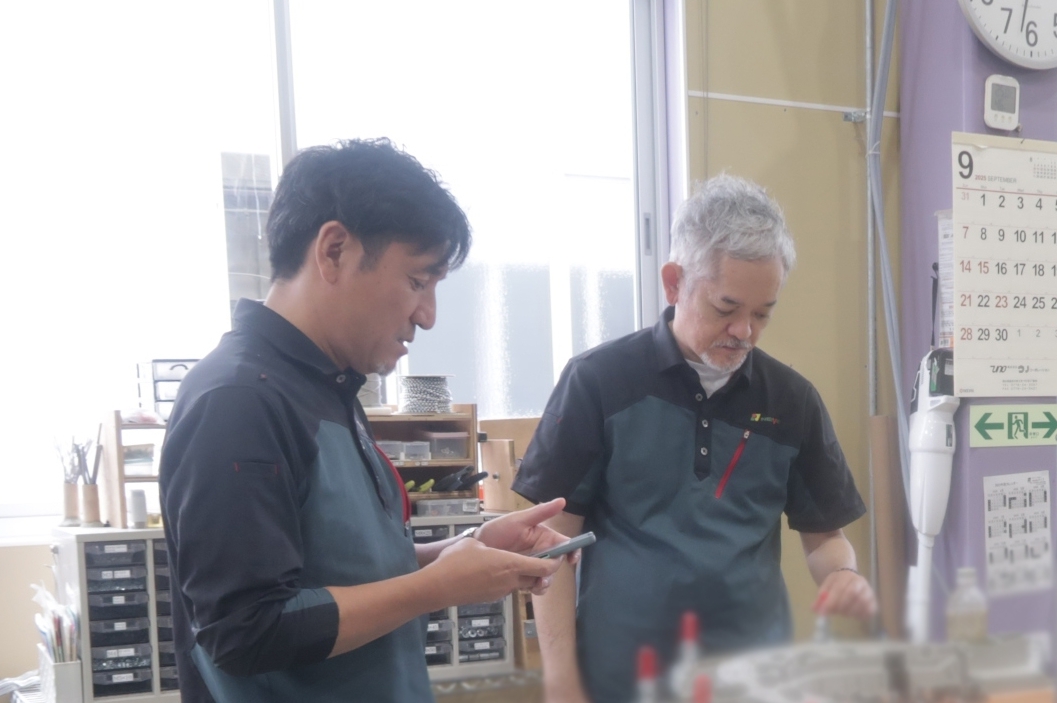
ーPlease tell us about the overview and strengths of NEIVE’s automotive inspection gauge manufacturing and sales business.
Masu Inspection gauges are tools used to accurately measure whether automotive parts are manufactured according to design specifications. They are essential to automobile production, and most automakers have inspection gauge manufacturers within their corporate groups. Our company is rare in that we are an independent firm and do business with all domestic automobile manufacturers.
Automotive parts differ in shape from one part to another, so inspection gauges are produced as high mix, low volume products. It is said that there are roughly 30,000 different types.
Completing a single product requires many processes, each demanding a high level of craftsmanship. As a result, inspection gauge manufacturers usually outsource materials and individual processes to second and third tier subcontractors. In contrast, we handle all processes internally, which allows us to provide products with short lead times, low costs, and excellent quality. This is a strength unique to our company.
ーHow has this strength been established since the company’s founding in 1990?
Masu I’ve heard that the founder was originally a farmer, and that NEIVE began when he introduced a single machine and started various types of processing. The company began handling inspection gauges after taking on work as a subcontractor for a group company of an automobile manufacturer.
Kaga City is not a company town for automakers, and there were no nearby competitors in the same industry. We had no choice but to handle all processes ourselves. Starting under those conditions, technical expertise in each process naturally accumulated within the company. We became able to meet client demands such as strict delivery schedules and low costs. That built trust, and eventually we grew to the point of dealing directly with automobile manufacturers.
ーManaging all processes in house must require strict process control. What measures do you take to maintain delivery schedules and quality?
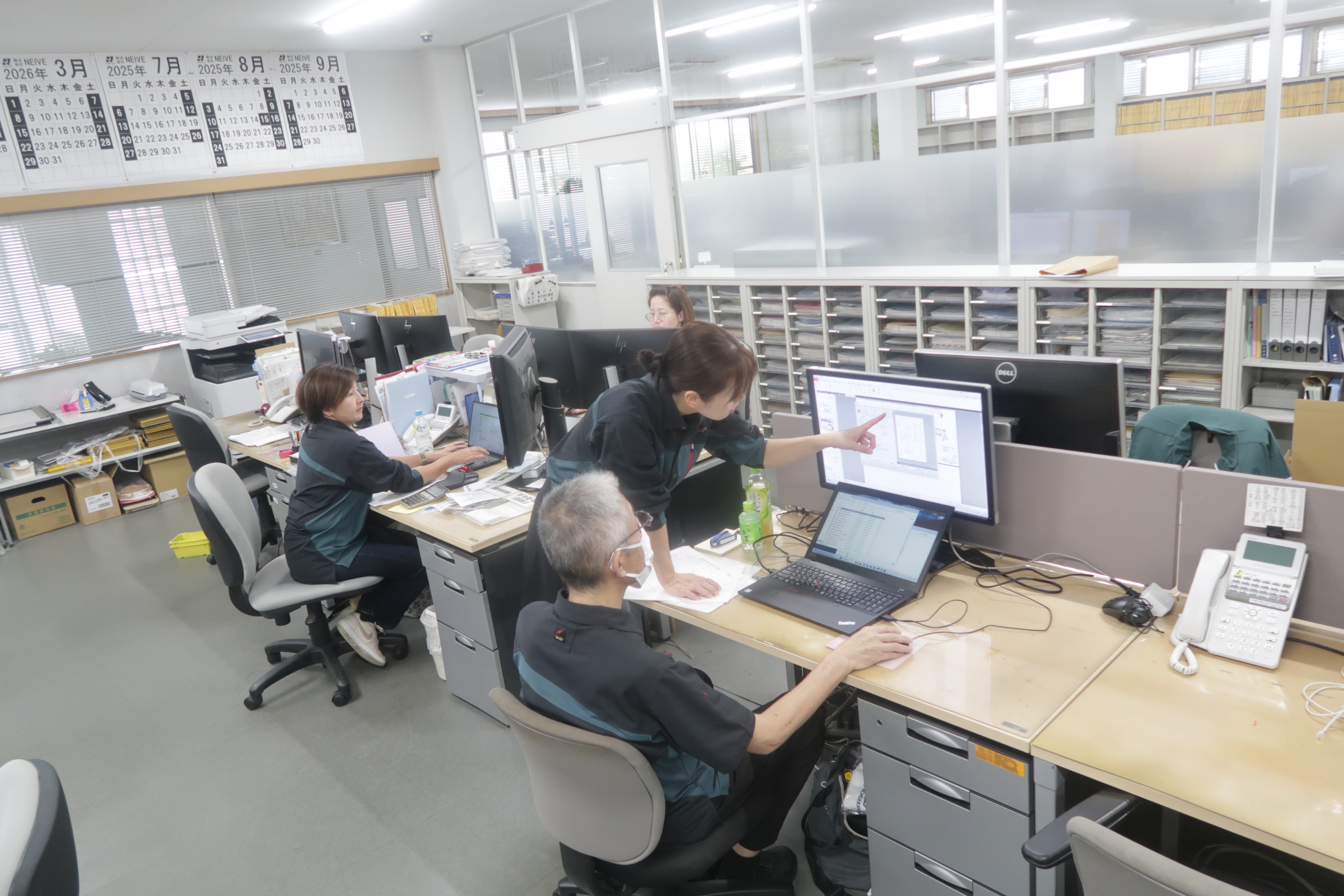
Masu We use our proprietary information management system called NACs. It centrally manages made-to-order production information and shares it internally in real time. Even with complex production processes, this system improves efficiency and enables us to meet delivery and quality requirements.
NACs were introduced in 2006, after the second generation president took office, as part of a management reform initiative. At the time, processes were managed on paper, and production could not keep up with the increasing number of orders.
To solve this issue, employees developed an original management system.
As a result, production efficiency improved dramatically, and we were able to take on projects that other companies had declined due to delivery constraints. Since then, the system has been repeatedly updated to match on site needs and is still operated today as a core system.
Capital Alliance with JAFCO Increased Employees’ Expectations for the Company’s Future
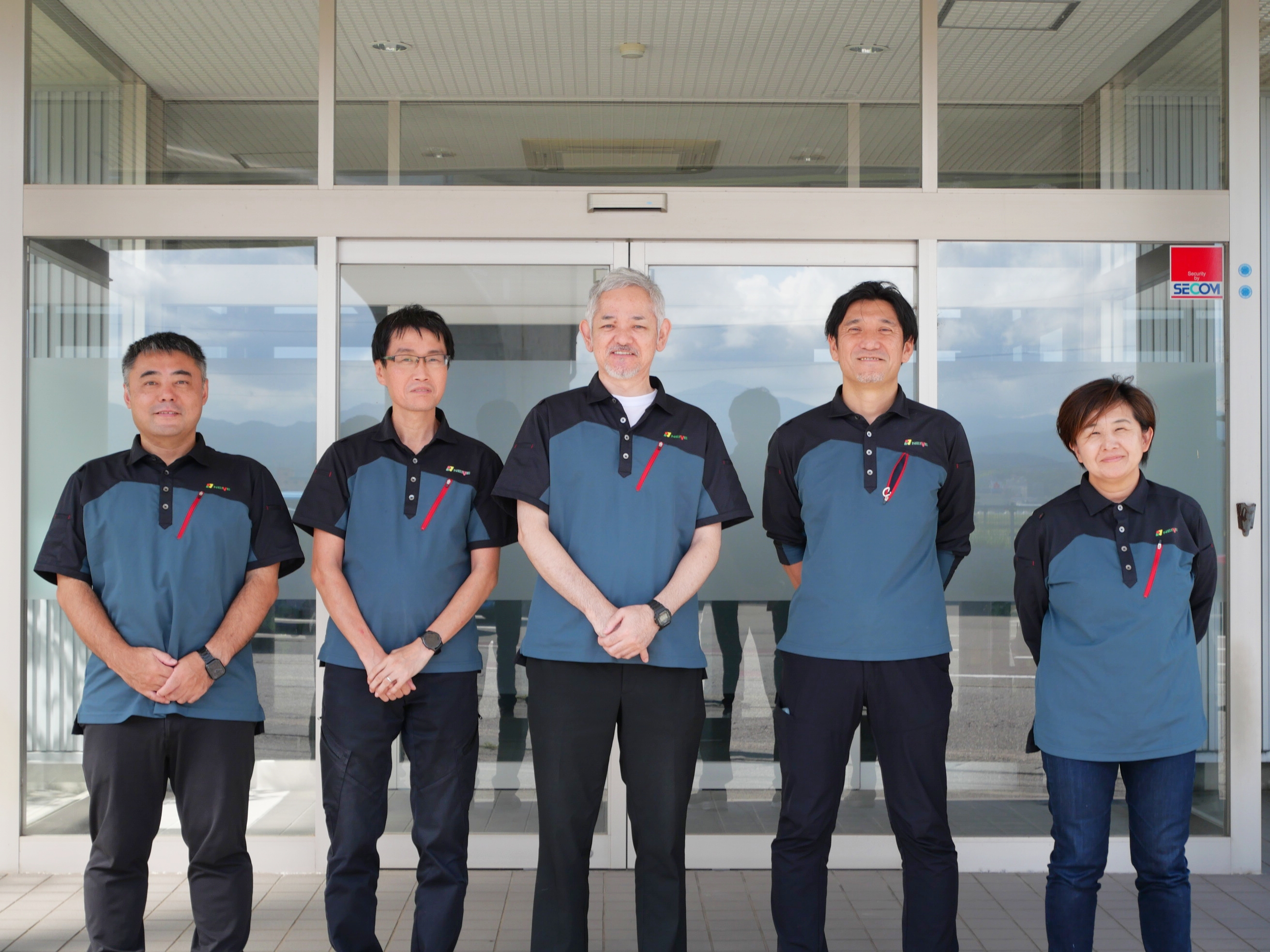
ーNEIVE formed a capital alliance with JAFCO in December 2024. You joined NEIVE in January 2025 and became Representative Director in June. How did this come about?
Masu I previously worked at a manufacturer of optical glass filters and molded lenses. That company formed a capital alliance with JAFCO, and Mr. Sunayama joined management as the investment manager. I have known him since that time.
Later, I was approached about joining the management team at a company called NEIVE, and that led to where I am today.
Sunayama In 2023, JAFCO was introduced to NEIVE’s former president by an intermediary and learned that, for various reasons, the company was considering a business transfer. At that time, the first person who came to mind as a member of the next management team was Mr. Masu.
Mr. Masu had been the number two executive at a former portfolio company of ours, an optical glass components manufacturer, where we worked together in management. Even then, I felt that he had the qualities suited to being a top executive.
By the time NEIVE consulted us, Mr. Masu had already left that company, so we contacted him right away. He initially joined as a member of the management meeting. Around the same time, we met with a considerable number of presidential candidates, but no one was more suitable than Mr. Masu. His understanding of operations, the handover from the former president, and his grasp of on-site conditions were the most advanced. As a result, he was appointed president.
ーWhat made you feel that Mr. Masu was the right choice to be NEIVE’s new president?
Sunayama First and foremost, his personality. He has an approachable manner that makes even first-time acquaintances feel at ease. He also has the ability to say difficult things accurately without hurting others. I have always found that impressive.
At his previous company, I often heard employees say that Mr. Masu had a way of capturing people’s hearts. The former president of NEIVE said that the company had many employees with strong individual traits, so I thought a manager with capacity and strong interpersonal skills would be a good fit. With Mr. Masu’s ability to lead people, I felt reassured.
As for the business itself, while optical glass components and inspection gauges are different products, the basic structure that a manufacturer takes to produce, sell, and generate profit is the same.
His previous company had two pillars, producing glass materials and processing purchased glass into lenses. As head of supply chain management, Mr. Masu oversaw the entire supply chain, which closely relates to NEIVE’s manufacturing operations. Considering the business content, scale, and corporate culture together, we judged him to be well suited.
ーMr. Masu, did you feel that your experience and orientation matched NEIVE?
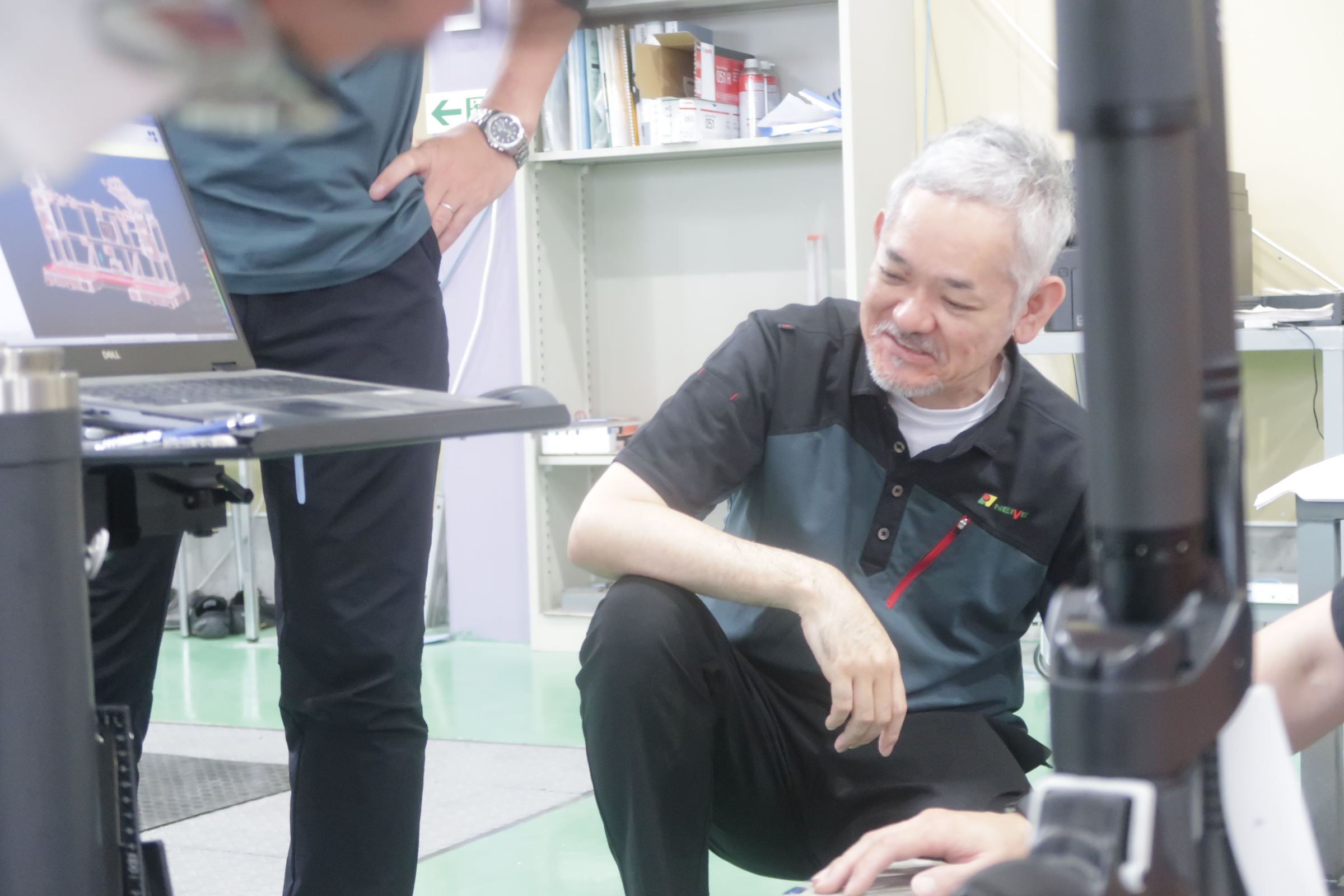
Masu Yes. Personally, I found myself overlapping my experience in store design with NEIVE’s production processes. My work involved designing and planning, then placing orders with carpenters, furniture makers, and building material suppliers, and managing the process. The sequence of building from the foundation upward, installing furniture, and finishing a store is very similar to NEIVE’s processes.
I also understood how mistakes in earlier processes could cause problems in later ones. In addition, I had experience in logistics and personnel management from my previous roles, and I believe I am now making good use of those experiences.
ーIn a sense, managing NEIVE is the culmination of your career. After joining, what challenges did you identify, and what new initiatives did you undertake?
Masu Each process has a high level of specialization, and our NACs manage each process very precisely. At first, my understanding of processes outside my own area was not sufficient. There was also little sharing of technical knowledge across the company. That becomes a problem because it limits adaptability.
For example, the main material for inspection gauges used domestically is resin, but overseas, metal is more common. To produce products for overseas markets, designs and processing methods suitable for metal are required. However, since everyone only had know-how for their own process, responding to new technologies was difficult. As a result, under the former president, the company had to refrain from overseas business.
To overcome this situation, after I became president, we reorganized the structure to make communication between processes easier and to allow everyone to share technologies and challenges. Immediately, opinions began to emerge actively from all areas. This company has always had highly motivated employees who insist on seeing their work through. Now, the entire workforce is engaged in trial and error as we tackle new technologies together.
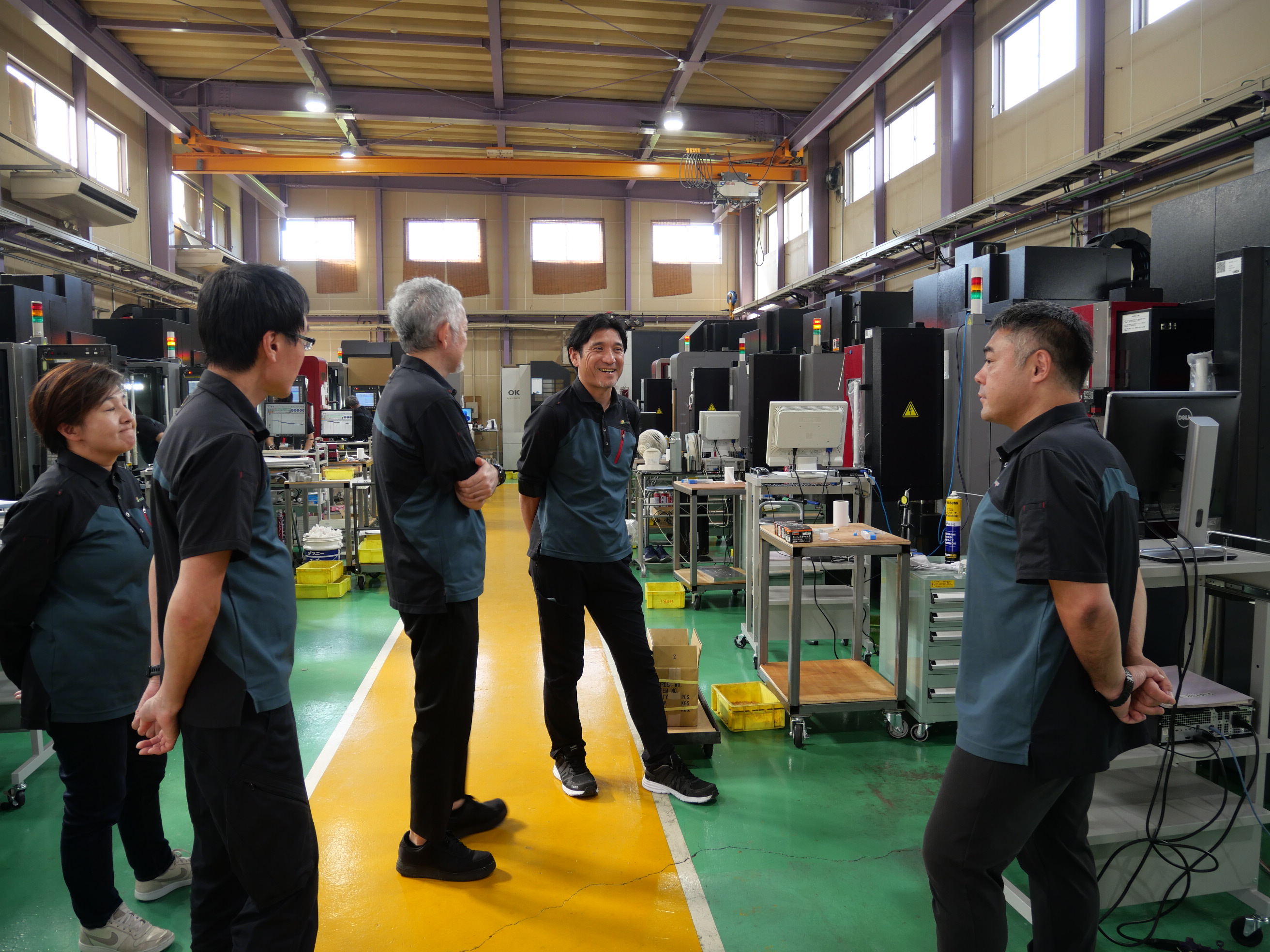
ーSo the people on the ground were already aware of the issues.
Masu I think so. They probably wanted to change.
Sunayama When a fixed structure continues for a long time, it becomes difficult for innovation to emerge. This capital alliance and Mr. Masu’s appointment as president marked a major turning point. I believe employees felt expectations that the company could improve further and grow more. That is why opinions are being exchanged so actively now.
NEIVE already has excellent technology and products. If on site collaboration is added to that, the growth potential is enormous. That is precisely the significance of JAFCO’s investment.
Masu Because I have known Mr. Sunayama for a long time, I generally understand what he wants to say and hopes to achieve. Our ways of thinking are similar, and I have a great deal of trust in him as a partner. On the other hand, employees are still getting used to him, and I feel that this creates a healthy sense of tension within the company.
ーWhat kind of support has JAFCO provided since the capital alliance?
Sunayama First, we supported the transfer of the former president’s duties to Mr. Masu, and during that process, we helped improve the work environment by introducing semi automated systems. We also strengthened the financial structure by recruiting a head of administration and introduced a referral hiring system.
I always implement referral hiring at portfolio companies, and at NEIVE, employees actively introduced acquaintances. We were able to hire about three people in a short period. That shows it is a company they can confidently recommend.
Masu Because it is a business that is not widely known, even locally the company does not have high name recognition. However, when applicants visit the factory during interviews, they become very interested. Since all processes are in house, they almost always find a position that resonates with them.
Business performance has been strong for a long time, and we pay bonuses four times a year. I believe it is an attractive company for anyone interested in manufacturing.
Leveraging Core Strengths to Take on Overseas Markets and Open Innovation
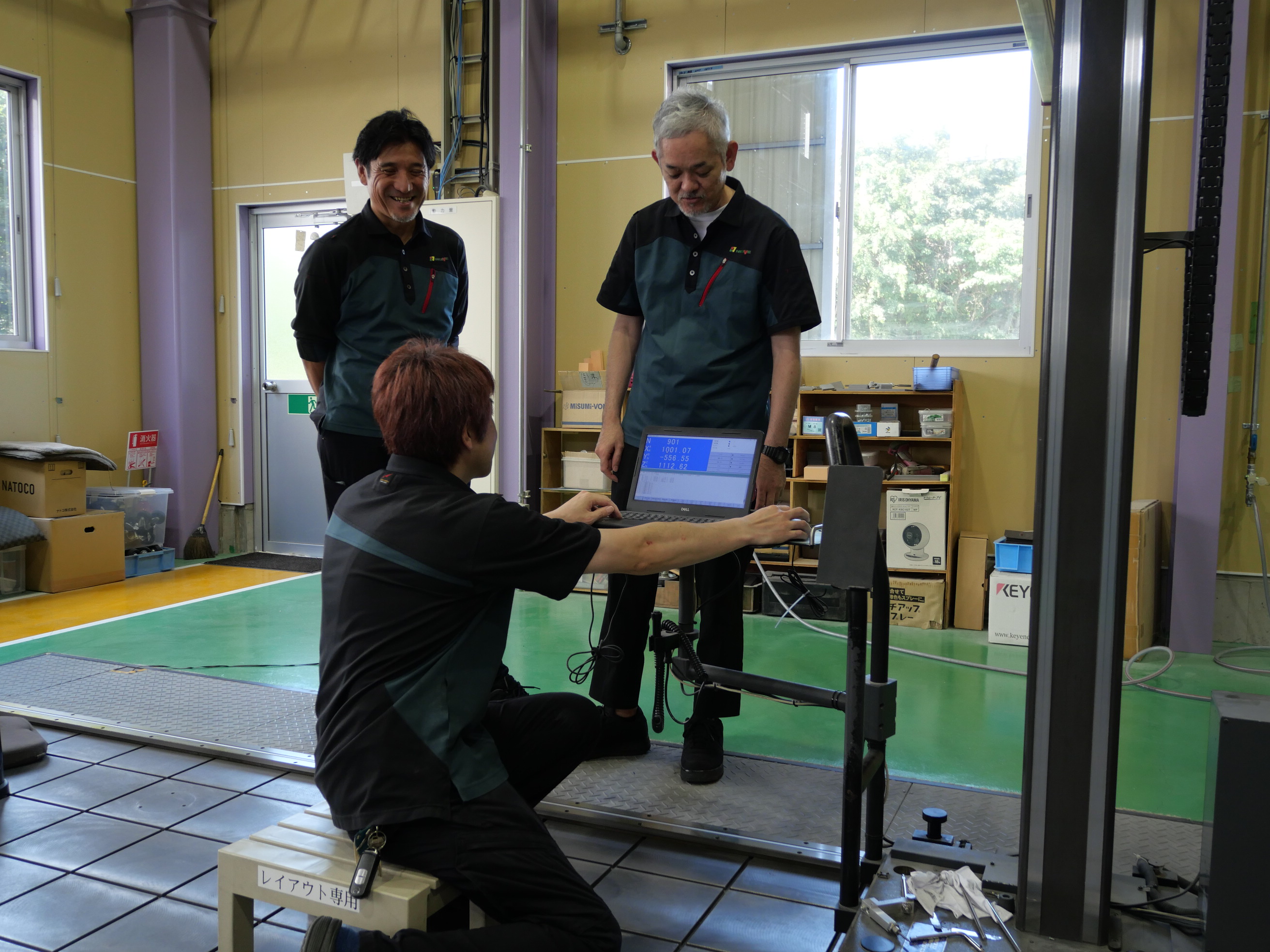
ーPlease tell us about NEIVE’s future direction.
Masu It may not be something to say in front of Mr. Sunayama, but I am not the type to set out a grand vision. Goals change, and sometimes you aim even higher. That is why I value a stance of doing everything we want to do right in front of us, rather than focusing on a long term vision.
With that in mind, strengthening products for overseas markets is a priority. Currently, we have direct transactions with Malaysia and indirect transactions with North America and India. We want to further expand overseas orders. We have also just begun to focus on expanding our product line. In addition to inspection gauges, we are promoting a business that manufactures jigs needed for parts assembly and provides them as a set.
Another focus is open innovation. Rather than strengthening an internal development department, I think it is ideal to partner with startups and leverage our strengths. Recently, I had opportunities to speak with startups in the agricultural equipment field. If there are opportunities to take on challenges outside the automotive sector, I would like to value them.
ーAs a manager, is there something you want to realize, such as the kind of society you want to create?
Masu I have long wanted to improve the image of manufacturing. Since we are located in a regional city, I feel that to attract younger talent, we need to better convey that working in manufacturing is enjoyable.
At our company, there is an environment where you can experience every stage of manufacturing. You can hone your skills or take on new fields in the future. On top of that, effort is properly rewarded. By making these strengths known, I would be happy if manufacturing in Japan as a whole became more vibrant.
Comment from the investment professional in charge, Tatsuhiro Sunayama
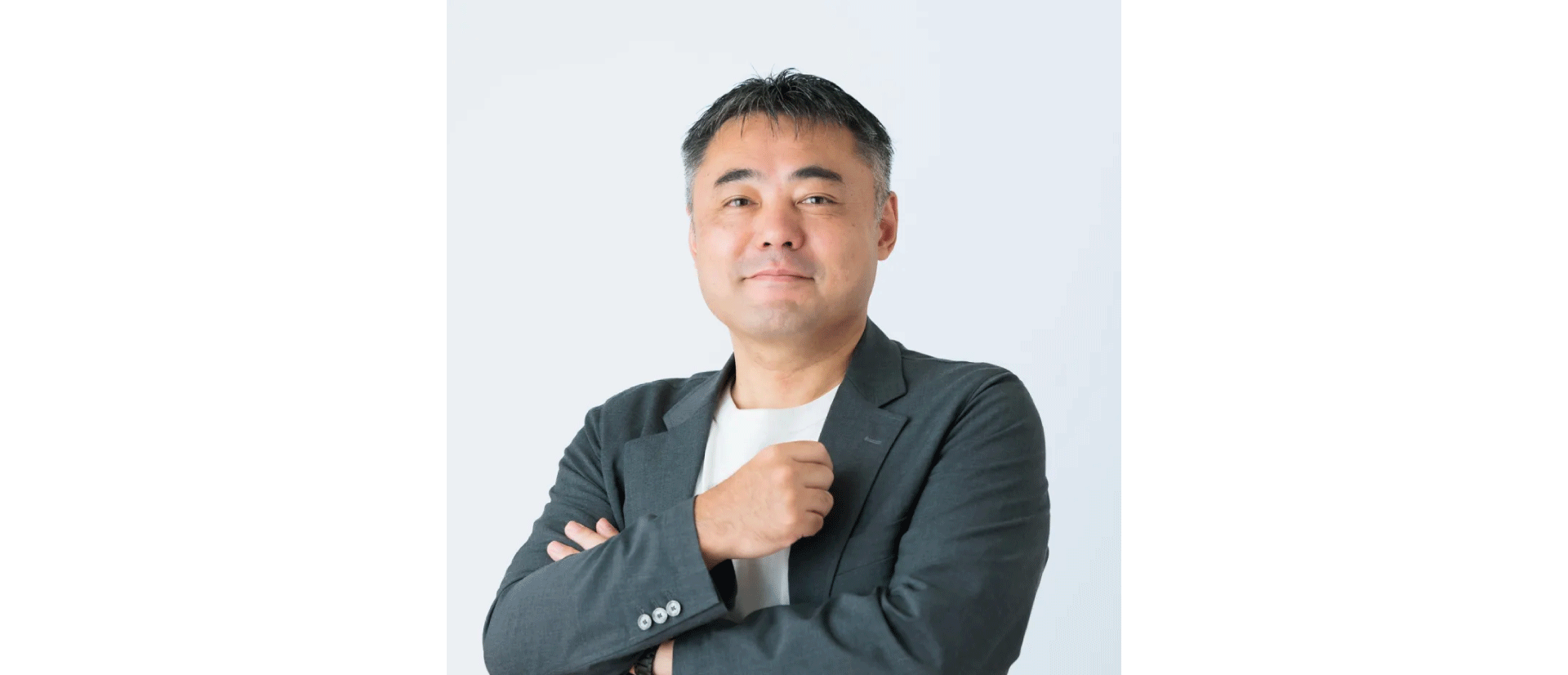
The automotive industry has entered a time of major change, but the manufacturing systems that NEIVE has refined within Japan’s automotive industry, which has long led global manufacturing, are exceptionally strong. As someone who has been involved with many manufacturers as an investor, there are many aspects that impress me, and I can feel the culture built by the founder and the former president.
Supporting this system are the sincerity and persistence of the employees, which may be a characteristic of people from Hokuriku. Coincidentally, I am also from Ishikawa Prefecture. With the new driving force that Mr. Masu brings, I hope to climb together toward a level of manufacturing excellence that other companies cannot reach.
-
Interviews with Portfolio Companies
A New Start for Matchmaking Leader Omicale.Creating Romantic Encounters Together with Local Governments and Companies
-
Interviews with Portfolio Companies
Life is Tech: A Startup at the Crossroads of Education and Technology
-
Interviews with Portfolio Companies
Transforming Society Together with Financial Institutions: A Fintech Startup Aiming to Establish a New Financial Ecosystem
-
Interviews with Portfolio Companies
Make "Caritas Job Hunting" No. 1 employment media. Decisions to maximize the company's potential
-
Interviews with Portfolio Companies
Choosing an AI startup with 53.3% revenue growth rate and IPO ambitions; Achieving discontinuous innovation through strategic capital/business alliances