
Interviews with Entrepreneurs
Advancing Society Through “AI × Talent”: AI Startup Grounded in Real Customer Challenges
#Back Office Support
Oct. 09, 2025
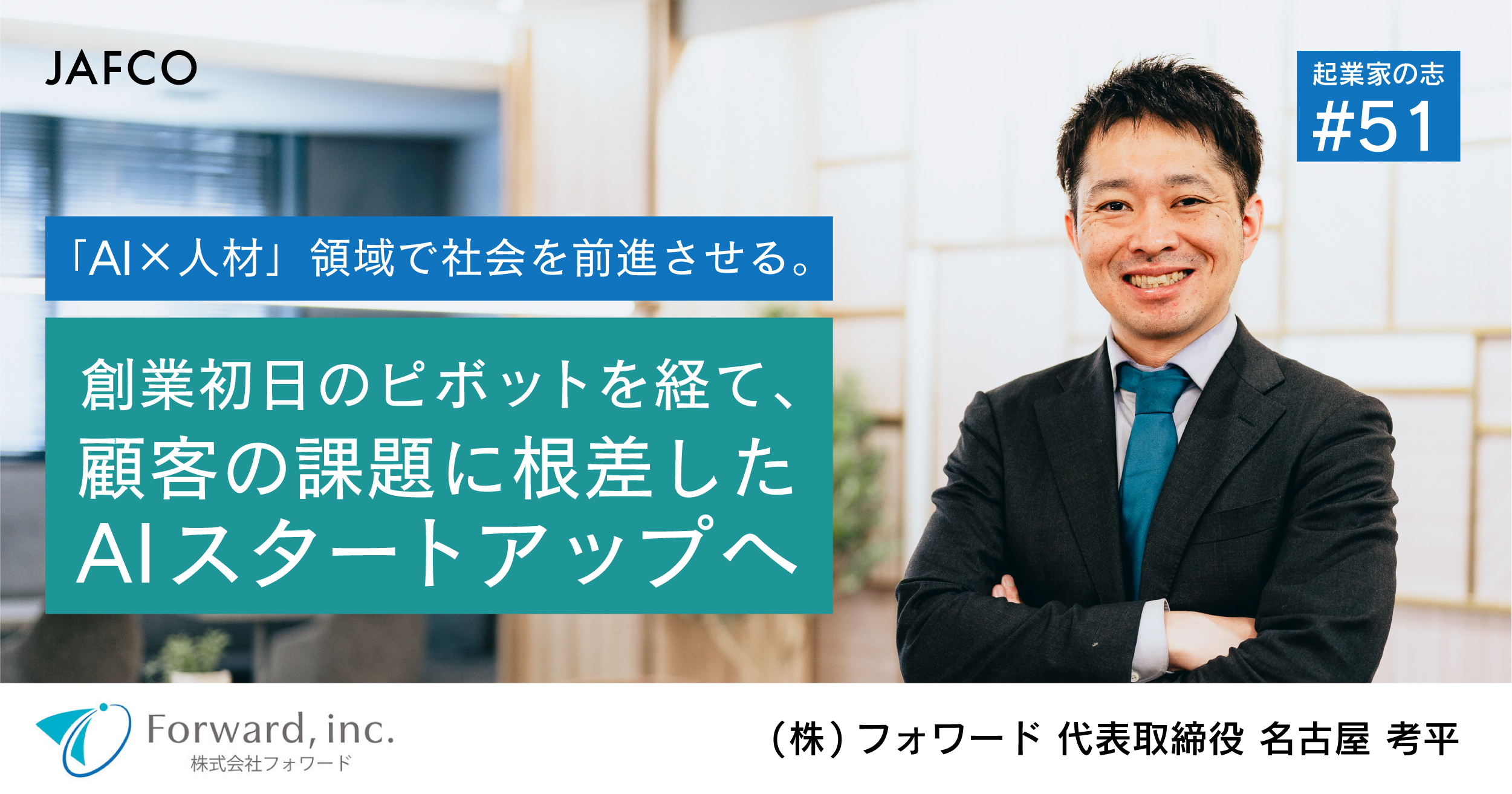
In 'Entrepreneurial Spirit,' we delve into the reasons people started their businesses, the initial challenges they faced, and their aspirations for the future.
In our 51st installment, we feature Kohei Nagoya, President & CEO of Forward, inc., and discuss the company’s future challenges and ambitions alongside perspectives from JAFCO’s investment professional in charge, Akira Nagashima.
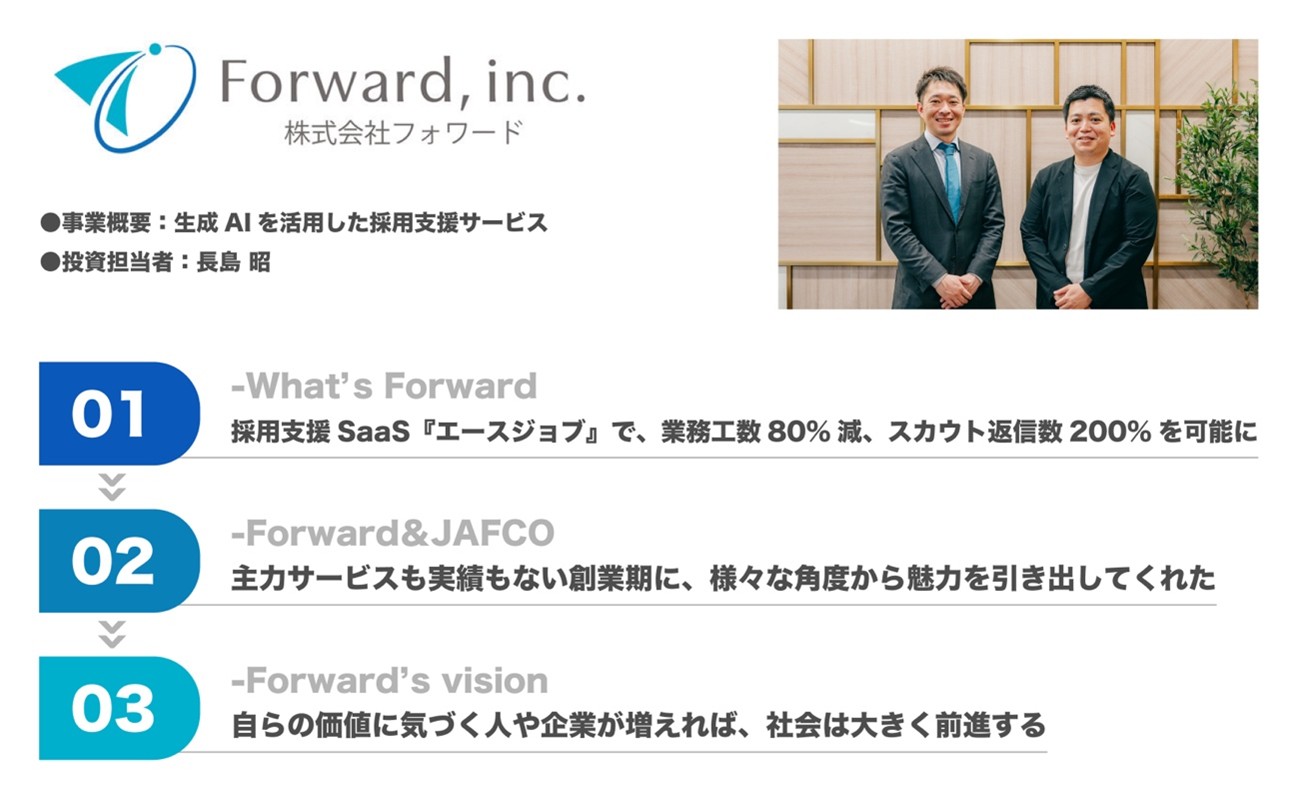
Forward, inc.
President & CEOKohei Nagoya
After graduating from the School of Commerce at Waseda University, Nagoya joined Dentsu Inc. in 2012, working for three years in the Media Division and three years in the Creative Division. In 2018, he moved to Creema Ltd., where he served as an executive officer overseeing marketing and products, leading the company to its IPO in 2020. In March 2023, he founded Forward, inc.
【About Forward, inc.】
With its mission of “unleashing talent around the world,” Forward provides services in the talent space through AI. Its flagship product, AceJob, is a recruitment support SaaS that dramatically improves the effectiveness and efficiency of hiring operations, including direct scouting, through generative AI. Since its official release in October 2024, AceJob has been adopted by more than 100 companies across industries as of May 2025, for both new graduate and mid-career hiring.
Forward, inc.
Recruitment Support SaaS “AceJob” Achieves 80% Reduction in Workload and a 200% Increase in Scout Responses
—Please tell us about the AceJob recruitment support SaaS.
Nagoya When companies hire talent, one common approach is to send “scout” messages to job seekers who have the skills and experience they are looking for and invite them into the selection process. This method allows companies to directly approach desired candidates and has become increasingly popular in recent years. However, when everything is done manually, from selecting recipients to writing and sending scout messages, the burden on recruiters becomes enormous.
AceJob uses generative AI to support these scouting and other recruitment tasks. It researches job seekers that match a company’s needs, screens candidates who fit the job posting, and creates fully customized scout messages tailored to each individual. Companies that have adopted AceJob tell us things like, “Our recruitment workload was reduced by more than 80%,” “We hired exactly the people we wanted,” and even “We can’t live without AceJob anymore.” The service enables significant gains in operational efficiency.
—Does AI-supported scouting improve not only efficiency but also hiring outcomes?
Nagoya Yes. Compared with sending template messages, the average scout response rate increases to about 200%. By combining job seeker data with job information, the AI clearly articulates why the candidate was scouted and why they are suited to the role, all aligned with the candidate’s career orientation. This dramatically improves the appeal of the message. Of course, companies can still adjust the wording and decide whether or not to send each scout.
Another well-received feature is that the AI explains the differences between candidates who were contacted and those who were not, and reflects this in a “match score” displayed during screening. In RPO services, how well the provider understands the company is critical, so we continue developing features to further enhance that accuracy through AI.
Scout messages are the first point of contact between job seekers and companies. When the first impression is positive, subsequent hiring steps tend to proceed more smoothly. As a result, we are also seeing higher offer rates and offer acceptance rates after introducing AceJob.
—You mentioned adoption by more than 100 companies. What types of companies see the most value?
Nagoya Company sizes range from startups with around 10 employees to organizations with several thousand. The strongest results tend to come from fast-growing companies with around 50 to 200 employees, where hiring needs are particularly high. These companies often struggle to hire fast enough to keep up with business growth, or they lack the time to properly manage scouting and therefore have low response rates. In some cases, we not only provide AceJob but also help build scouting operations and support recruitment activities more broadly.
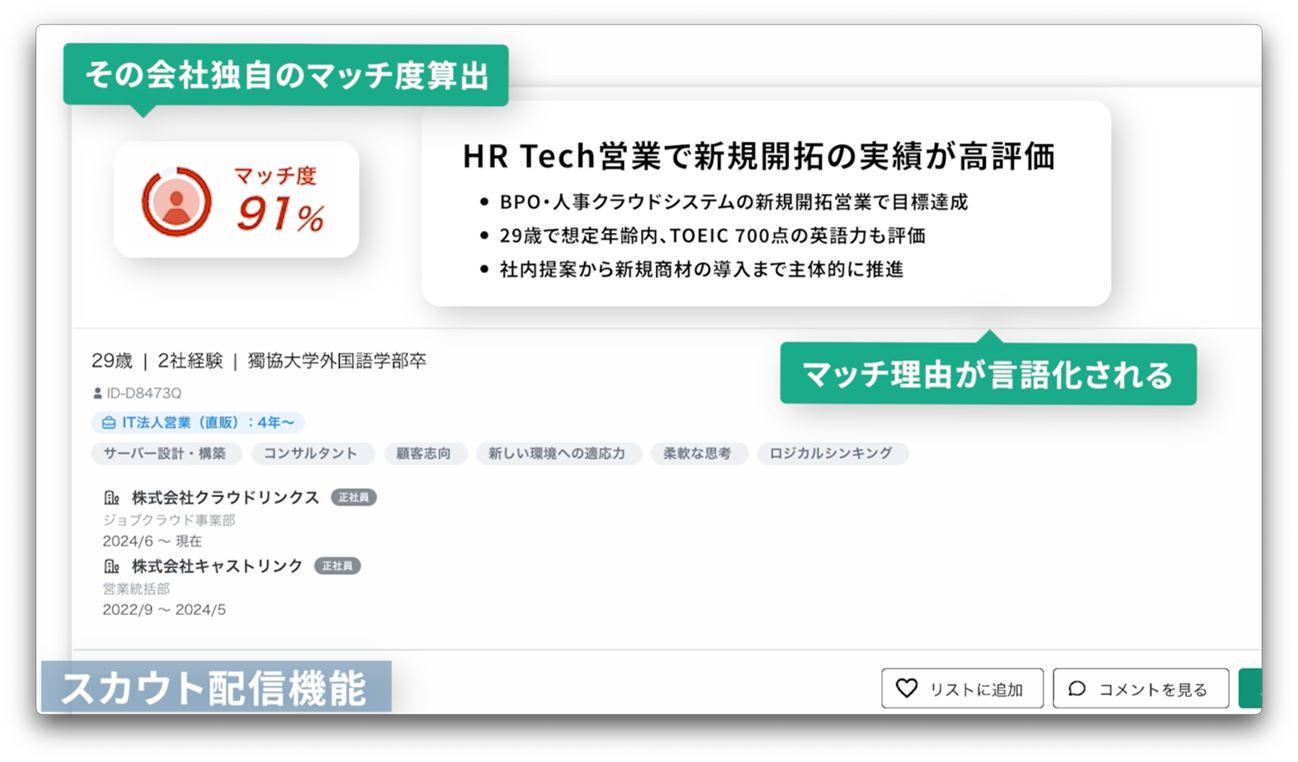
AceJOb’s demo screen
—What first prompted you to consider starting a business?
Nagoya It goes back to high school. When I was captain of the baseball team, one of our alumni, who ran his own company, came in as a coach. He taught us team management and how those skills could be applied to business in the future. That sparked my interest in entrepreneurship, and I joined an entrepreneurship circle in university.
After graduating, I considered starting a company right away, but I wanted experience in “creating something new,” so I joined Dentsu. While working in the Creative Division, I had opportunities to support startups. That made me realize that if I truly wanted to start a business, I needed experience at an operating company or startup. I took a 35% pay cut and moved to Creema, which operates a handmade marketplace.
At the time, Creema lagged behind competitors by about twice the gross merchandise value. Over four years, we managed to turn that around, and the company went public on the Tokyo Stock Exchange Mothers market (now TSE Growth). Achieving those results gave me confidence, which ultimately led me to start my own company in 2023.
—Why did you choose the AI × talent space, an area you had no prior experience in?
Nagoya Out of around 100 ideas I considered, I initially landed on a model similar to a “career-change RIZAP,” where job seekers would receive skill training before being introduced to companies. I chose the HR space because, at Creema, I experienced firsthand how results are driven by the power of a team. That convinced me that people are essential to company growth, and I wanted to build a business that supports that.
Then, on the very day I founded the company, the ChatGPT API was released, making it possible to integrate ChatGPT into various applications. The agent business I had initially planned had nothing to do with AI, but given market trends, it felt unthinkable not to use the ChatGPT API. So I decided to pivot on day one (laughs).
After that, we launched several AI × talent services, but they didn’t go smoothly. While preparing to run the original agent business in parallel, I started thinking that it would be great to have a service that used AI to create fully customized, thoughtful scout messages. I refined the prompts in great depth, tested the completed messages in our own agent business, and saw the numbers improve. That convinced us to productize it. After interviewing more than 300 corporate recruiters, AceJob was born.
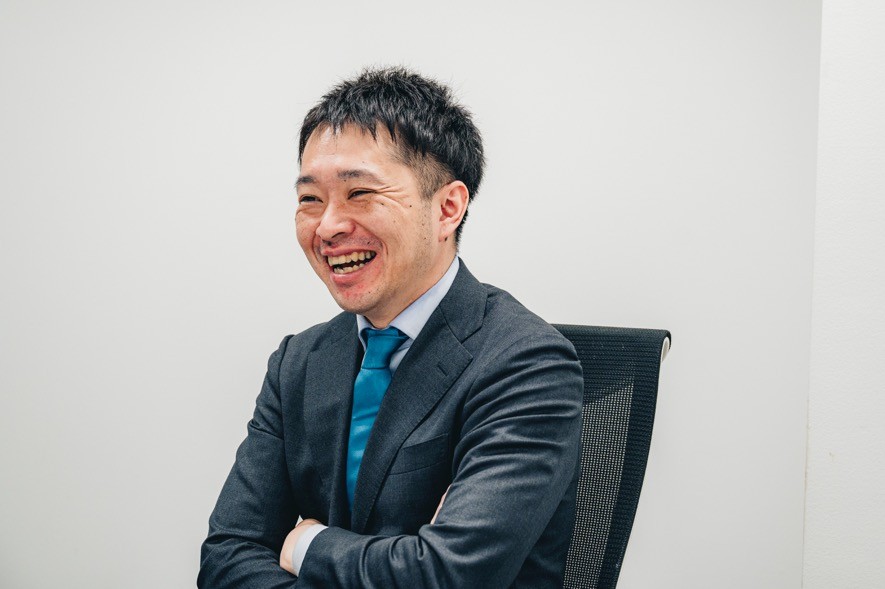
—AceJob clearly went through many twists and turns. How have your experiences at Dentsu and Creema helped you as a startup CEO?
Nagoya At Dentsu, I worked in both the Media and Creative divisions. In Media, I developed core business soft skills like empathy and negotiation. In Creative, I learned how to articulate thinking processes. Being able to clearly instruct AI on how to think leads directly to higher-quality prompts.
At Creema, I served as an executive in charge of marketing and products. Understanding how products are built and how much effort they require is extremely valuable now. The experience of going through an IPO will also be invaluable as we grow our own company.
In the Early Days, with No Flagship Product or Track Record, They Helped Draw Out Our Strengths from Every Angle
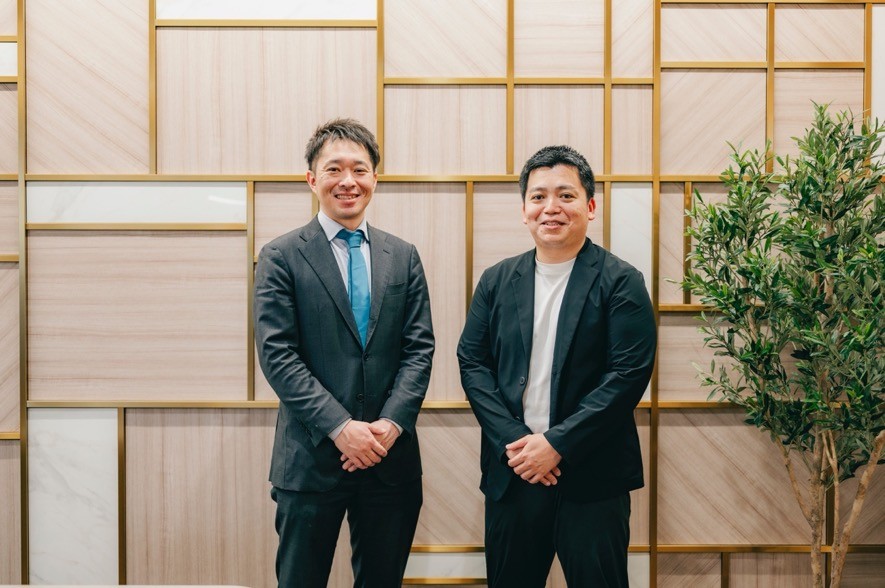
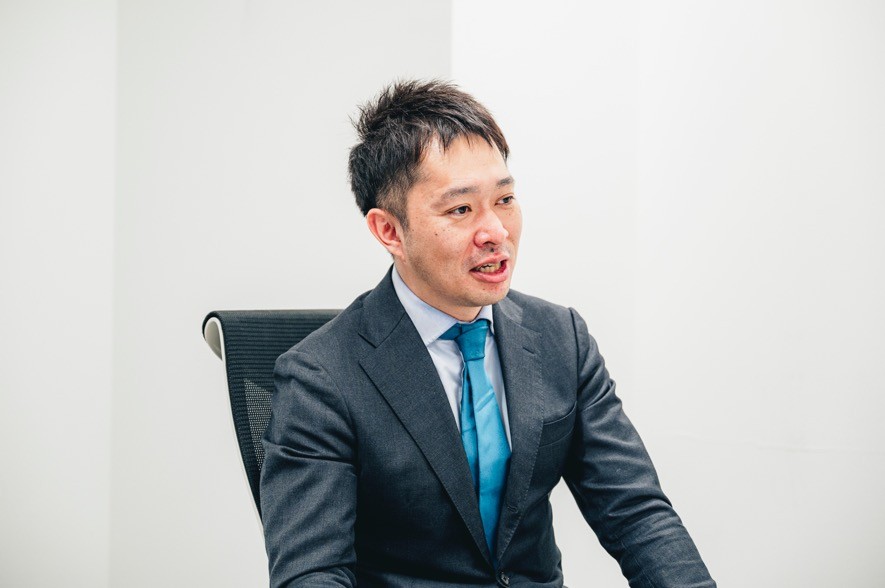
Kohei Nagoya (Forward) and Akira Nagashima (JAFCO)
—In April 2024, you raised a total of ¥200 million in a seed round with JAFCO as the lead investor. How did that come about?
Nagoya Once we decided to build an AI-based product, we began considering fundraising with future hiring in mind. I first met JAFCO in July 2023 at a startup event. A VC friend introduced me to partner Yutaro Saka. He spoke kindly, but his sharp gaze left a strong impression. I remember thinking, “This person is something else” (laughs).
I met Mr. Nagashima later during a formal meeting. At the time, we only had two employees, and our pre-AceJob service was just barely up and running. When we decided to seriously pursue fundraising a few months later, we worked hard to explain our seed-stage strengths, such as government subsidies we had secured and several AI-related patents we had already obtained.
Nagashima My impression of Mr. Nagoya has always been the same: he is incredibly earnest in everything he does. That really came across in our conversations. I was also surprised by the speed at which he secured patents so early on. Given his extensive experience at Dentsu and Creema, he had already caught my attention even before he formally decided to raise funds.
—Seed investment is difficult to judge based on results alone. Beyond Mr. Nagoya’s character and background, what else appealed to you?
Nagashima First, he had a firm grasp of the major trend of generative AI. More importantly, he wasn’t treating it as a buzzword but was trying to elevate it into a service grounded in real end-user problems.
To put it bluntly, neither his original concept nor the current AceJob is a flashy, glamorous business. But the problems customers face on the ground are not glamorous either. They are messy and practical. The fact that he clearly understood that essence left a strong impression.
I also resonated with his flexible mindset of treating AI strictly as a means, and not hesitating to involve human effort when it serves the customer’s needs. That approach allows deeper insight into customer needs, and the accumulated data in turn increases the value of the AI. If this virtuous cycle can be realized with Mr. Nagoya’s discipline and speed, I felt it could become a business with enormous potential.
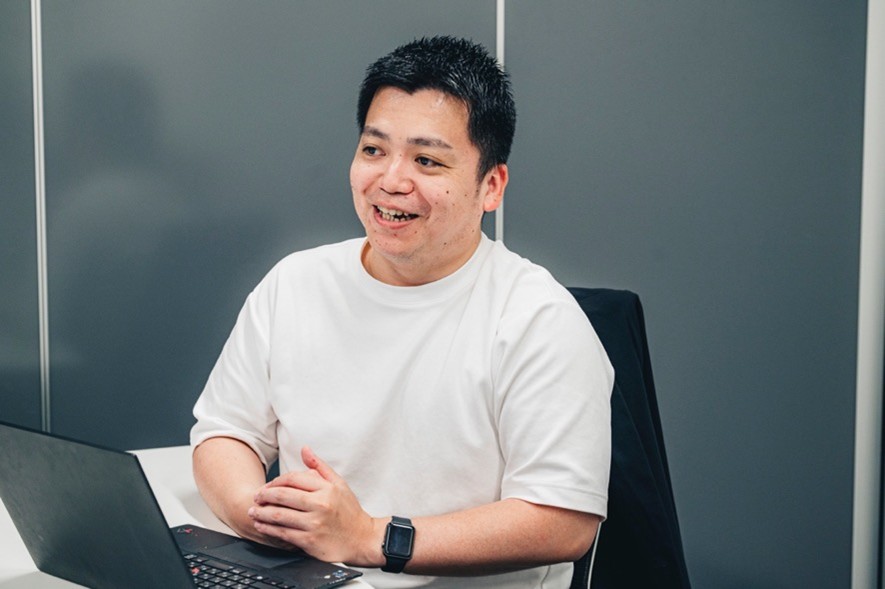
—Were there any hurdles internally at JAFCO when considering the investment?
Nagashima Forward was at a pure seed stage, so the key was how to assess future growth potential rather than quantitative results. We asked Mr. Nagoya to introduce us to prospective clients and spoke directly with them. Hearing their candid feedback helped us better understand the potential of what he was trying to build.
Of course, with generative AI evolving so rapidly, there are uncertainties. Still, seeing Mr. Nagoya’s character, execution ability, and how he brings people together gave us strong confidence that he would see it through. That ultimately led to our decision to invest.
—What made you decide to choose JAFCO in the end?
Nagoya Mr. Nagashima helped draw out our strengths from many angles, and with each interaction, our trust deepened.
One particularly memorable moment was when I mentioned patents we had obtained during an early meeting. He took the time to research them in detail and came back in the next meeting with specific questions and insightful comments. No other VC had gone that far, so I was genuinely surprised. I felt they truly understood the areas we were confident in and stayed closely engaged throughout.
Looking ahead to potential follow-on investments, a large fund like JAFCO is also very attractive. My trust in Mr. Nagashima and Mr. Saka, as well as in JAFCO as a VC, became the deciding factors.
—It’s been over a year since the investment. What kind of communication do you have now?
Nagoya In addition to monthly regular meetings, they provide flexible support through ad hoc discussions and introductions to potential clients. JAFCO also uses AceJob for its own hiring, and by working with their HR support teams for portfolio companies, we have been able to expand usage within the JAFCO network. We continue to maintain a very positive relationship.
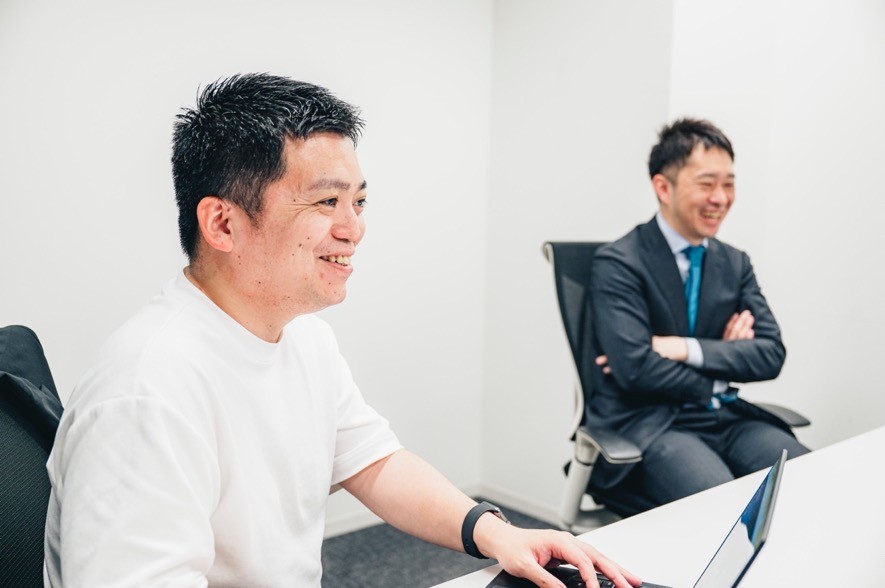
When More People and Companies Realize heir Own Value, Society Moves Forward
—After the fundraising, how do you plan to scale the business?
Nagoya Revenue has been steadily increasing. Compared to a year ago, our monthly revenue is up tenfold. Because our model combines monthly subscription fees with success-based fees, there is still plenty of room to grow.
On the product side, we recently added a “document screening” feature to AceJob. Large companies can receive as many as 10,000 applications a year, so this function significantly reduces the labor and cost involved in reviewing them.
We are also considering a “recruitment content creation” feature that applies AceJob’s advanced reasoning and output capabilities, which are currently used to create compelling scout messages, to job ads and other hiring content. The job advertising market is larger than the scouting market, so capturing that space is one of our future visions.
—Through the AI × talent business, what kind of society do you want to help create?
Nagoya Our mission is “unleashing talent around the world.” For example, a job seeker might receive a scout message and realize, “I didn’t know I had this kind of talent,” or a recruiter might read a message and think, “I didn’t realize our company had this kind of appeal.” Through AceJob’s ability to put value into words, many people come to recognize their own worth.
Labor shortages will only become more severe. Some companies will be forced to close because they cannot hire, while others can grow endlessly if they secure the right people. When more individuals and companies recognize their own value and take a step forward, society as a whole advances. That’s the future we want to help create.
—What kind of people do you want to grow the company with as you pursue this mission?
Nagoya The phrase we often use is “people who can face value head-on.” Being sincere about customer value and business value, and being willing to try anything necessary for that purpose, is the mindset we need. I personally think about nothing else, and I have no pride about how I am perceived by others (laughs).
When tackling unprecedented products and development processes, imagination is also an important skill. At Forward, we are completely open about numbers and fundraising. We value high-quality internal communication and the sense of collectively building the business. That is something we can do precisely because of our current size, so if this resonates with you, we would love to hear from you.

Comments from the investment professional in charge, Akira Nagashima

Mr. Nagoya and the Forward team truly have incredible energy and momentum. It may not be flashy, but they relentlessly tackle real, on-the-ground problems and solve them with AI. This not only delivers results for customers but is also becoming a source of new possibilities for many job seekers. I strongly believe AceJob will change the norms of recruitment, and I look forward to continuing to support them wholeheartedly as their partner.
-
Interviews with Entrepreneurs
Creating New Experiences Through “Chatting AI”: A New Relationship Between Humans and AI That Goes Beyond Convenience
-
Interviews with Entrepreneurs
Transforming Japan's Major Corporations into "AI-Native Companies": A Vision from the Frontline of AI Agent Development
-
Interviews with Entrepreneurs
A Practicing Doctor Tackling the Challenges of Cardiac Rehabilitation: Advancing Japanese Medicine Through App-Based Exercise Therapy
-
Interviews with Entrepreneurs
Fair Pricing for All: Industry Expert Aims to Transform Used Car Market with Auto Marketplace Kababa
-
Interviews with Entrepreneurs
Laser Fusion: Tackling Humanity's Problems Together with a Nobel Prize-Winning Mentor