
The Reality of Venture Support
How JAFCO's One-on-One Meetings with Every Employee Revealed the Key to Overcoming the "30-Person Wall": PocketSign’s Organizational Reform and Next Stage of Growth
Jul. 10, 2026
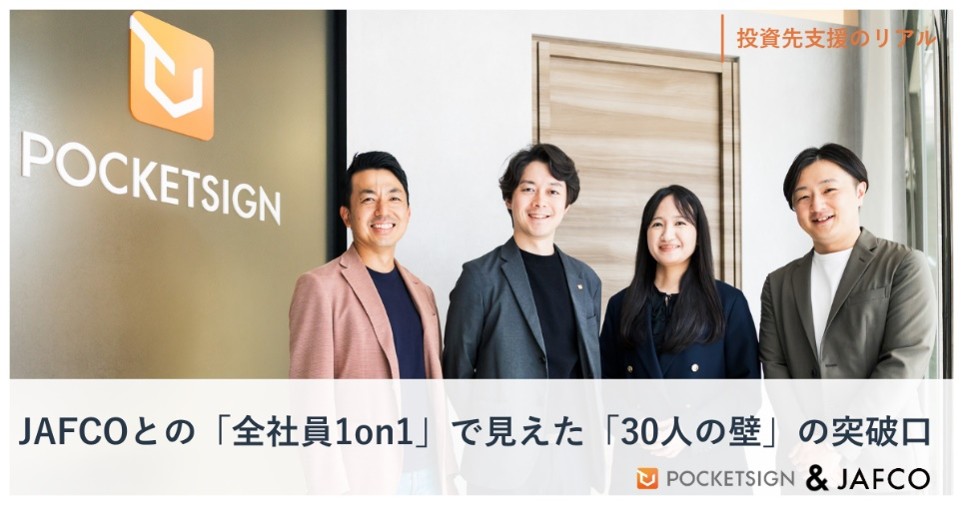
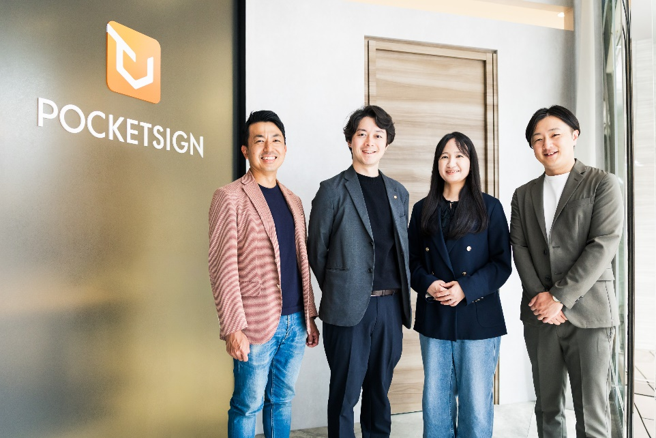
PocketSign Inc. provides a digital identity platform utilizing Japan’s My Number Card system. Since its establishment in 2022, the company has rapidly expanded its presence in both the public and private sectors. However, in the autumn of 2025, after its organization had rapidly grown to around 30 employees, it encountered the so-called “30-person wall” that many startups face—the management and organizational growing pains that often emerge at that stage.
By using JAFCO’s one-on-one interviews with every employee as an “external stimulus,” the company overcame a serious crisis marked by a chain of employee departures and communication bottlenecks caused by a siloed organization. This organizational reform ultimately led to the company’s next phase of business growth, including winning a major contract. CEO Koji Umemoto, CFO Hiromasa Iwasaki, HRBP Manager Hiromi Kisu, and JAFCO’s Masakazu Yazaki, who supported the company throughout the process, discuss what they saw after overcoming those challenges.
【profile】
Koji Umemoto, Co-Founder & CEO, PocketSign Inc.
After serving as a JSPS Research Fellow (DC1) at the Yukawa Institute for Theoretical Physics, Kyoto University, and as Director and Head of Research at Dharmacapital Co., Ltd., Koji Umemoto co-founded PocketSign Inc. in August 2022. He became Representative Director in April 2023. Holds a Ph.D. in Science from Kyoto University and graduated from the Faculty of Law at the University of Tokyo.
Hiromasa Iwasaki, CFO, PocketSign Inc.
Hiromasa Iwasaki worked in overseas business investment at Marubeni Corporation. He later served as CFO of a Marubeni US subsidiary, worked at EY Strategy and Consulting, and was Director of FP&A at Opn Holdings Inc. (now Omise), where he was involved in fundraising, M&A, and other initiatives. Graduated from Hitotsubashi University, Faculty of Commerce.
Hiromi Kisu, HRBP Manager, PocketSign Inc.
Hiromi Kisu has worked consistently in general affairs and human resources since joining the workforce. She built up broad experience in HR, labor management, recruitment, system design, and general affairs at both listed companies and companies preparing for IPOs. In her previous position, she established labor management systems and prepared listing review documents for an IPO, contributing to the company’s listing on the TSE Growth Market. She currently oversees HR and general affairs, formulates and executes recruitment strategies, and strengthens labor management systems.
Masakazu Yazaki, JAFCO Group Co., Ltd.
Masakazu Yazaki worked for a human resource development consulting company where he was in charge of projects for SI/IT consulting companies. After that, he joined an overseas IT company as a human resource manager. Then, at Akatsuki Inc. and KAKEHASHI Inc., he took charge of organizational development, human resource system planning, and human resource management from the start of engineer recruitment organizations and HRBP organizations. He joined JAFCO in April 2025. He is a member of the HR Support Team in the Business Development Division and is engaged in supporting the growth of portfolio companies from aspects such as human resource recruitment and organizational development.
Challenging the Creation of Infrastructure That Lowers the “Cost of Trust” in Society
—To begin, could you briefly introduce PocketSign’s business and your current priorities?
Umemoto (CEO): We operate a business centered on utilizing the My Number Card system to “lower the cost of trust in society.” The world is rapidly becoming more digital, but the digital space carries risks such as identity fraud, making it less compatible with trust. Our strength lies in holding a minister-certified license that allows us to fully utilize the functions of the My Number Card. We provide a secure and reliable identity verification system and are taking on the challenge of creating the next generation of social infrastructure.
We initially started with public-sector businesses such as digitizing disaster shelter reception for local governments, but we are now in a phase where we are also accelerating expansion into private-sector businesses.
The “Wall” Common to Startups That Emerged Behind Rapid Growth
—As your business grew rapidly and your organization expanded to around 30 people, I understand you encountered serious organizational strain. What was the situation like at the time?
Iwasaki (CFO): At the time, while our business was growing rapidly and the organization was expanding—which was certainly a positive development—we also ran headfirst into what is commonly called the “organizational wall.” We reached a point where someone was leaving the company almost every month, and several employees also went on leave.
Among frontline employees, there were growing concerns and uncertainty about what direction the company was aiming for. At the same time, multiple employees left certain departments, including managers, and I think the atmosphere across the company deteriorated considerably.

Umemoto (CEO): At the time, we were trying to present ourselves externally as a more mature company by creating large-company-style hierarchies and dividing the organization into “groups” and “units.” Looking back now, I realize those choices created unintended side effects.
We ended up with numerous units that had no members, while employees in one-person departments became isolated. The organization became siloed, and people started thinking things like “This is as far as my job goers.” As a result, we lost the sense of unity on the front lines that should have been one of a startup’s greatest strengths.
Iwasaki (CFO): Around September and October, we introduced engagement surveys and well-being surveys. The results showed “potential resignation” signals one after another on the screen. We were facing a critical situation where, if things continued, our annual turnover rate could reach 40%. That was when we realized we couldn’t solve this on our own anymore, and so we reached out to JAFCO for help.
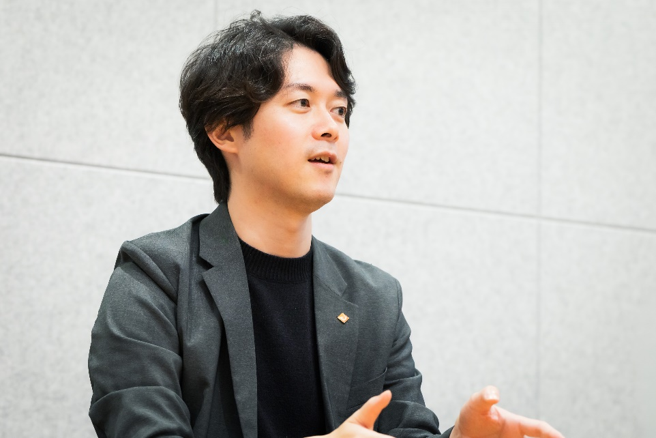
Yazaki (JAFCO): After receiving that request, I became involved with PocketSign around the summer of last year as part of JAFCO’s HR support for portfolio companies. The first time I attended an all-hands meeting and a social gathering, around October, my first impression was that it was a genuinely great organization. Everyone was very friendly, highly capable, and sincerely wanted to make stakeholders happy through the product.
However, when I looked more closely at the workplace, I also saw that although each individual was highly capable and deeply focused on their own work, some people were fighting their battles alone. The management team was extremely busy serving as player-managers, with schedules packed at all times. As a result, employees felt a psychological barrier that made it difficult to approach them for consultation. I could sense a feeling of exhaustion throughout the office. I remember immediately feeling that we needed to make visible the gap in expectations between management and frontline employees, as well as the communication bottlenecks that existed between them.

Why the Labor-Intensive Option of One-on-One Interviews with Every Employee?
—Initially, PocketSign requested management training. Instead, Mr. Yazaki proposed conducting one-on-one interviews with every employee. Why did you make that decision?
Yazaki (JAFCO): Mr. Iwasaki did ask whether we could introduce a management training program. However, I felt intuitively that simply providing training to add knowledge or hiring people to fill vacant positions would only repeat the same negative cycle unless the underlying problems were addressed.
When I previously worked in HR at operating companies, I experienced firsthand how difficult it was to have internal issues accepted when they were pointed out from within the organization. Improvements were often delayed because an internal-only approach had its limits. The most important thing was to help management objectively recognize and fully understand the current situation.
We could listen, as an investor that understood the company’s circumstances while also serving as an independent third party, to concerns and frustrations that employees could not express internally. We could then present those findings as objective facts. Only then could management gain a genuine understanding of reality and use that understanding to redesign organizational roles and responsibilities needed to achieve the business plan. I was convinced this approach would have the greatest leverage, which is why I proposed one-on-one interviews with every employee.
Umemoto (CEO): I clearly remember him saying, “Let’s start with a health check for the company. First understand the symptoms, then decide on the next course of action.” That made perfect sense to me. At the same time, it was simply something we couldn’t have done internally, so we were extremely grateful that they took it on.
Kisu (HRBP Manager): When interviews are conducted by management, they’re inevitably tied to people’s daily work and performance evaluations, so employees don’t tell you what they really think. In reality, employees found it difficult to speak honestly to people within the company. Because Mr. Yazaki was an outsider who also understood our situation well, I think everyone felt comfortable speaking openly with him. We were truly grateful that he listened to those honest opinions, identified the underlying issues, and provided advice on how to solve them.

The Honest Voices That Emerged and Management’s Unawareness of Its Own Influence
—Mr. Yazaki, you conducted one-on-one 30+ minute interviews with each of the company’s 29 full-time employees at the time. What kinds of honest opinions emerged?
Yazaki (JAFCO): I spoke with everyone from the middle of November through the end of December last year. We gathered feedback from five perspectives: the appropriateness of management, goal setting, accumulated organizational stress, employees’ feelings toward the organization, and communication issues.
Among employees reporting directly to CEO Umemoto, there were many positive comments expressing respect for his sincerity toward the business. At the same time, communication bottlenecks caused by his heavy workload as a player-manager had become a serious issue. People said things like, “It’s difficult to see the direction of product development and company policy,” and “There’s a high barrier to asking for advice.”
We also heard very candid comments such as, “Communication from management is so brief that we end up overthinking things.” One thing I specifically shared with Mr. Umemoto was that he seemed unaware of just how much influence he had. Employees tended to treat everything the CEO said as company decisions, whereas he himself may not have been fully conscious of that.

Umemoto (CEO): That really caught my attention. I thought I was simply saying things casually, like, “This is what I think,” expressing preliminary thoughts before making any decisions. But from the employees’ perspective, every word from the CEO carried significant weight.
His advice was that speaking casually the way I did in the early days, like a group of friends saying, “Here’s what I think,” had become an exercise of tremendous power and authority at the company’s current scale, and that I needed to recognize that my behavior is always being watched. That advice was incredibly valuable. Because I was in a position where I could see the organization from above, I hadn’t realized how fragmented information had become internally. That was the first time I truly recognized it as an issue.
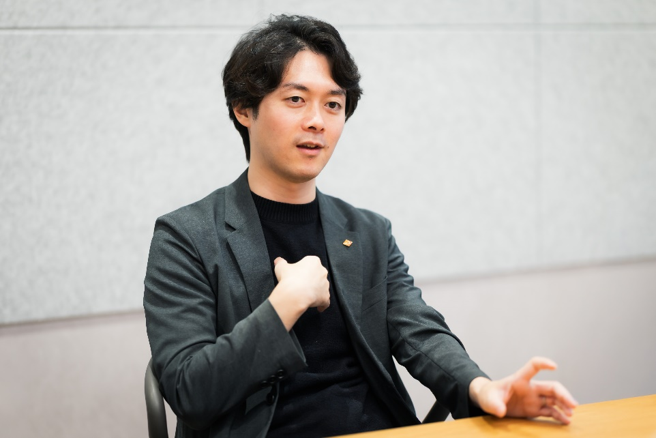
Yazaki (JAFCO): When presenting these findings to management, I was careful to frame them not as problems attributable to specific individuals but as structural issues involving organizational design and role allocation resulting from business growth, supported by objective facts. To ensure employees felt safe speaking honestly, we strictly followed the rule that no reports would identify individuals by name. We also scored management effectiveness on a ten-point scale and presented those scores together with qualitative comments.
Umemoto (CEO): Receiving that objective “health check” from Mr. Yazaki gave us the opportunity to confront reality head-on and just say, “I see, this really isn’t good.” The reason we could accept it without becoming emotional was because he served as a highly transparent external mirror
Breaking Down Silos Through a Major Organizational Integration and Leaders’ Self-Disclosure
—After receiving the feedback, you reportedly moved remarkably quickly to redesign the organization. What specific measures did you implement?
Umemoto (CEO): Once the issues became crystal clear, we carried out what could genuinely be called a major organizational integration effective January 1. We completely reset the complicated hierarchy of groups and units that had been creating bureaucratic silos, reduced organizational barriers, and simplified everything into teams.
Another major initiative was strengthening communication. We increased the frequency of communication from management and greatly improved transparency by explaining not only the reasoning behind decisions, but also situations where decisions had not yet been made, why they could not yet be made, and the surrounding context.
We also emphasized once again the fundamental value of our business. Our business is not simply that of a SaaS company. We are developing our own products while creating a new social model together with big players like local governments and major enterprises. In reality, some employees had left because they felt a gap between their expectations before joining the company and the actual work, which required adapting to unique public bidding processes and customized implementations. So I openly admitted, “Sorry—even I thought we were SaaS, but we’re not.” I told everyone: “What we’re taking on is a completely new concept that doesn’t even have a name yet. Let’s create the right answer together.” Our employees are highly capable, so once we properly explained the background, they understood, aligned themselves with the same direction, and moved forward together.

Yazaki (JAFCO): During the one-on-one interviews, we repeatedly heard employees asking, “Are we a SaaS company or not? Who exactly are we?” I shared that feedback with Mr. Umemoto. It was wonderful to see him respond directly to those concerns and communicate the answer immediately.
Iwasaki (CFO): We also started holding two- to three-hour workshops once a month to reinforce our new values and company culture. When Mr. Yazaki first proposed them, I was honestly skeptical and thought, “Do those things really make a difference?” because I was so focused on the business. But we decided to involve everyone and use them to improve the quality of dialogue.
To address the complaint that people didn’t know what neighboring departments were doing, we also introduced a weekly session called “Introduce Your Work,” where members from each team give presentations. By helping everyone understand each other’s personalities and recording the sessions as organizational assets, we’ve seen more conversations taking place across team boundaries.
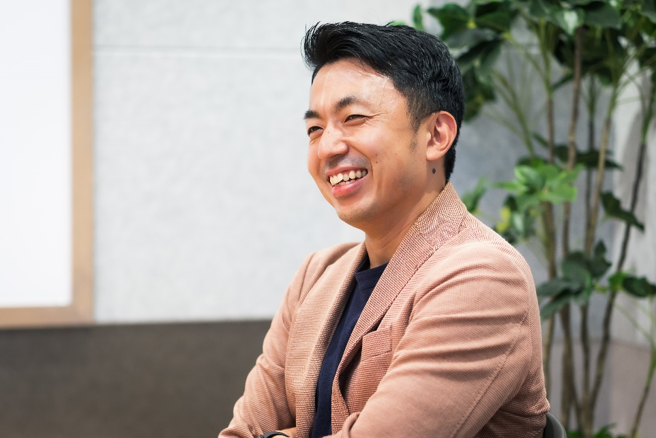
Umemoto (CEO): The foundation of communication is self-disclosure and mutual understanding. I thought to myself that if the CEO doesn’t do it, nobody else will. So one day at an all-hands meeting, I unexpectedly gave a presentation introducing myself (laughs). I talked about my background while showing photos of my hometown and openly shared who I am. My goal was to lead by example and send the message that we were going to build a culture where everyone understands one another. People listened with genuine interest, and I’m really glad I did it.
Kisu (HRBP Manager): Mr. Yazaki advised us that, at our current stage, rather than suddenly introducing sophisticated HR initiatives, the approach with the greatest leverage would be to steadily focus on clarifying roles, improving the quality of dialogue, and strengthening the fundamental work environment.
Based on that advice, we reorganized our onboarding process by separating full-time employees from contractors, introduced “shuffle lunches,” where groups of at least three people from three or more different teams receive a lunch subsidy of up to ¥2,000 per person, and launched a company-wide Monday lunch where everyone eats together. The company-wide lunch has been very popular, so beginning last month we made participation voluntary. Even so, many employees continue to join naturally, and it seems to have become something people look forward to on Mondays.
Individual Strength Came Together to Form a Team, and Business Performance Improved
—As the organizational transformation progressed, what changes did you see in business performance?
Umemoto (CEO): I feel that everyone’s attention is now aligned toward the same goal. I’m especially pleased to see a culture developing where people help each other across departmental boundaries, picking up the ball that falls between departments so to speak. The defensive comments we used to hear everywhere, like, “Which department is responsible for this?” have almost completely disappeared.
The atmosphere across the team has improved, people find it easier to talk and rely on one another, and I can genuinely feel that the organization’s overall strength has increased. This April, we won a very large contract with a local government. I strongly feel that our organizational development has indirectly increased our ability to drive business growth. Our business performance is also steadily improving.
Kisu (HRBP Manager): Since the organizational restructuring in January, every employee has become noticeably more positive and enthusiastic about their work. Previously, much of my effort went toward supporting individual employees. Now we’ve reached a stage where we can focus on producing results as a team. The clearest sign of progress is that we are seeing many more situations where individual growth translates into team success.
PocketSign originally grew through the strength of individuals, but I now have a real sense that we have reached the stage where the organization itself is becoming strong.

Yazaki (JAFCO): Even looking at the monthly all-hands meetings, they’ve changed dramatically. Previously, employees felt they couldn’t see what management was thinking. Now those meetings are used interactively to fully align understanding across the company and eliminate uncertainty among frontline employees.
The biggest reason PocketSign achieved such a remarkable turnaround was that the management team accepted the feedback sincerely and immediately took action. Their speed in making decisions and following through made all the difference. It was inspiring to witness the organization evolve into a truly unified team.
The Value of Relying on JAFCO as a Long-Term Growth Partner
—How do you evaluate the value of having JAFCO, as an investor rather than your internal HR department, become so deeply involved in organizational development?
Umemoto (CEO): More than anything, it was reassuring to have trusted experts available immediately when our organization encountered serious difficulties. JAFCO consists of professionals who have seen startups and organizations at many different stages. As investors, they already had an exceptionally deep understanding of our business, our management team, and even our personalities without us needing to explain them.
On top of that, rather than proposing flashy solutions, they first confirmed the actual situation and then quickly and concretely helped us tackle the practical things that needed to be done. I believe that’s an enormous source of value unique to JAFCO, which has a dedicated team that supports the business growth of its portfolio companies.

Iwasaki (CFO): I really feel they take excellent care of us. What makes JAFCO attractive is that they don’t just invest money as a venture capital firm—they offer a wide variety of support. Even when we’re pursuing business opportunities, if we tell them we’d like to connect with companies in a particular industry, they immediately leverage their network to make introductions. When organizational issues arise, they provide an invaluable outside perspective that makes the reality of what’s happening visible. I think founders should make much greater use of that resource.
Kisu (HRBP Manager): Although they are an outside party, you can genuinely feel that they sincerely want to solve problems together with you. That’s why we were able to trust them completely. The sincerity with which everyone at JAFCO regularly visited us and remained committed gave people inside the company a tremendous sense of reassurance.
Yazaki (JAFCO): At JAFCO, “own it and see it through” and “draw on differences to ignite creativity” are phrases that express our values. My superior also tells me, “The fairway for increasing the enterprise value of our portfolio companies is very wide. If you think you can contribute, don’t limit yourself—propose something and take action.” We’re neither consultants nor volunteers. But because we’re shareholders, we occupy a unique position that allows us to commit, free of charge, to the long-term growth of the companies we invest in and support them continuously over time.
Today’s business environment is increasingly complex, and it’s extremely difficult for a single founder to continue scaling a business alone. When you encounter the growing pains of organizational development, don’t try to carry the burden by yourself. We hope you’ll make full use of us.
Koji Umemoto (CEO): We’re counting on you. We look forward to continuing to work together!
-
.png)
The Reality of Venture Support
Why a Professional CEO Sought Coaching: Waterfront’s Organizational Reform Challenge Accompanied by a Coach for Two Years and Three Months
-
The Reality of Venture Support
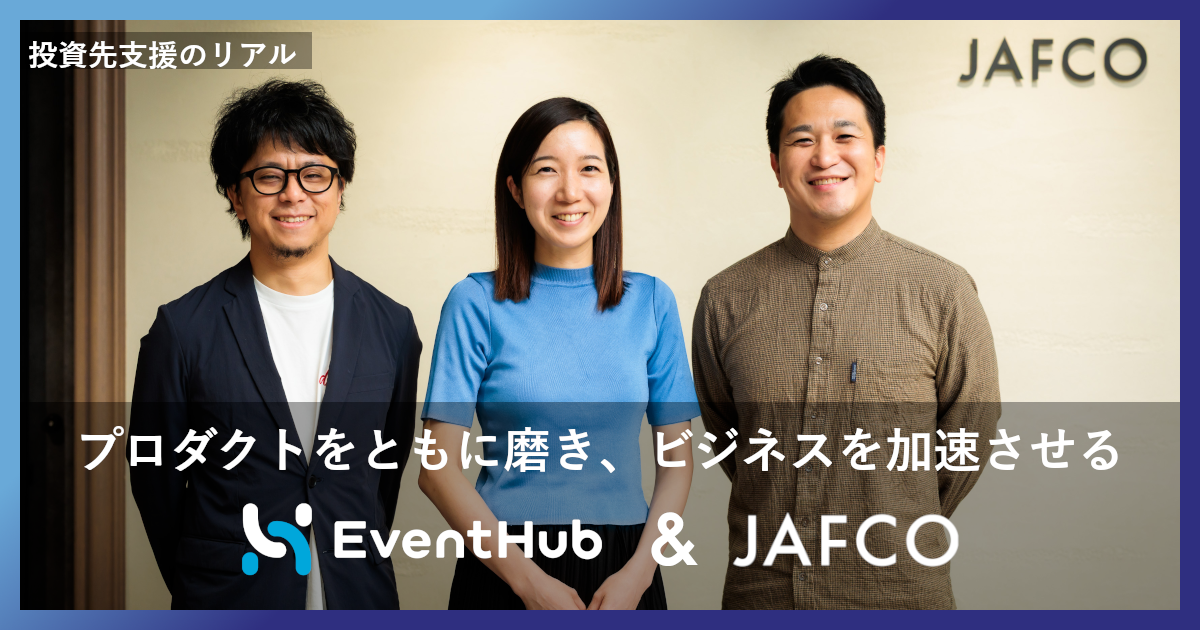
Polishing Products Together and Accelerating the Business: EventHub’s Challenge, Backed by JAFCO’s User-Centric Support
-
The Reality of Venture Support
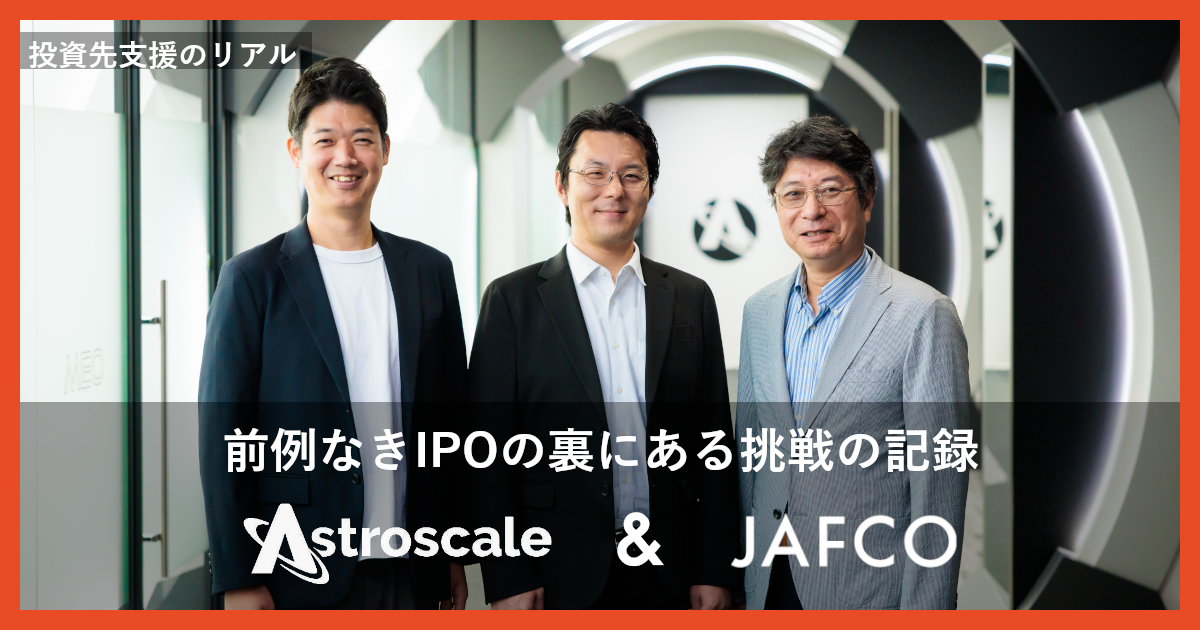
True Partnership in Uncharted Territory: The Challenge Behind the World’s First Space Debris Removal and the Journey to the IPO
-

The Reality of Venture Support
How to Apply "Leverage" to Both People and the Organization: The Role of HR Support in Enhancing Portfolio Company Value
-
The Reality of Venture Support
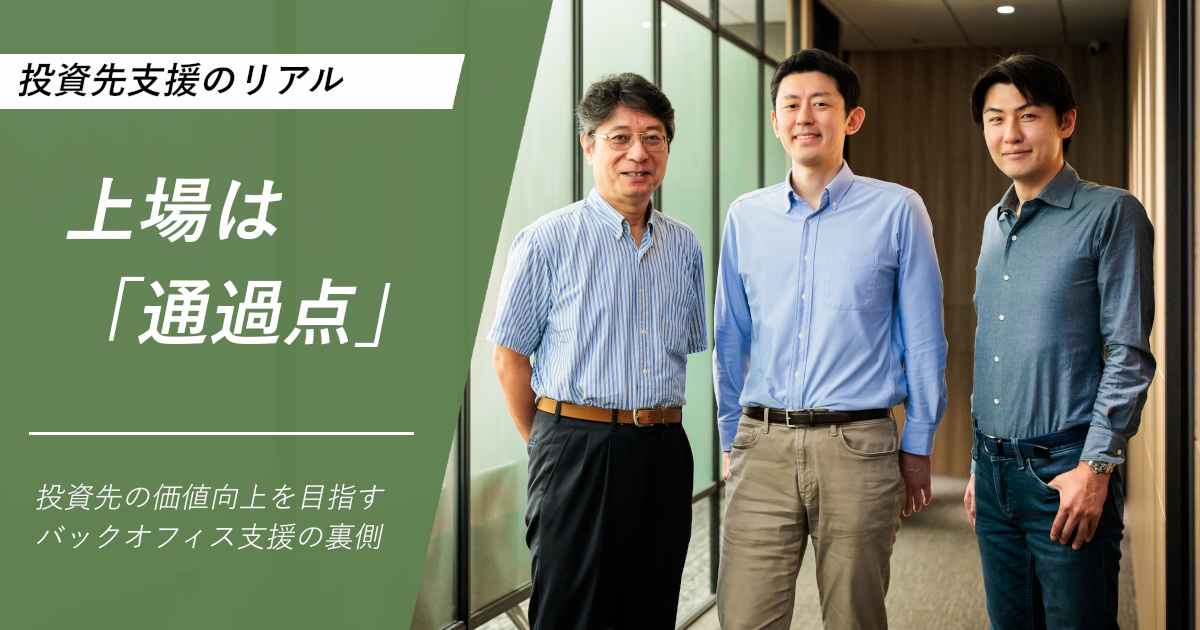
An IPO Is Just a "Milestone": Behind the Scenes of Back-Office Support Aimed at Increasing Portfolio Company Value